

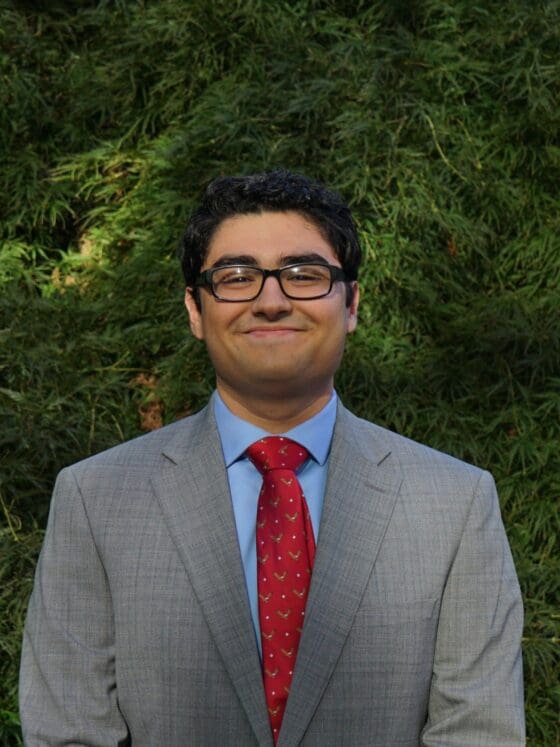
“Without the WA Grant, I would probably not be able to go to college.”
What’s your name, what school do you attend, and what are you studying?
My name is Diego Gonzalez. I am a third-year student at Seattle University, majoring in Criminal Justice and graduating this year!
What are your career or education goals after college?
After getting my bachelor’s degree, I will be applying to law schools as I want to become an attorney and serve my Washington community. I am also interested in eventually obtaining a Ph.D.
What inspired you to pursue college or training after high school?
I think the main thing that inspired me to pursue college right after high school is to improve my quality of life through a degree. Not only does a degree increase my financial opportunities, but it also helps me grow as a whole person as I learn more about ethics, philosophy, religion, history, politics, etc. I would like to believe that I am a lifelong learner.
Have there been any challenges along the way? What helped you overcome them?
I think the biggest challenge in college life for me has been not knowing a lot of things about college. As a first-gen student, I don’t know how to advocate for myself for certain things like scholarships or housing. I was very fortunate that Seattle University has the CLP+ program which introduced me to a lot of useful programs on campus. Also, there are extremely helpful people on and off campus who have supported me and provided me with guidance on issues that I have run into.
Are there any classes, programs, or people who’ve helped you figure out your path?
I think a ton of people from Lake Washington School District helped me figure out that college was for me. Mr. Hayes from Redmond High School was my homeroom teacher and was extremely supportive of me going to college. He told me that I would do good there, which meant a lot because he had a doctorate and had that experience in higher education. People from my high school Latino club, like Judith Mercado, and the Equity department at LWSD, like Pablo and Sergio, also helped. The Hispanic Scholarship Fund’s Youth Leadership Institute also really helped me out and talked more about private universities which I more or less ruled out at the time because of the cost.
You’re a recipient of the Washington College Grant. How did you first hear about it?
I first heard about the Washington College Grant as a senior in high school when I received my financial aid package from Seattle University. I didn’t know that much about it until I became an ICW fellow, and I learned more about its importance.
What was your reaction when you found out you qualified for the WA Grant?
I grew up low-income, so it wasn’t really a surprise to find out that I qualified for the WA Grant, but I was surprised about its existence. I think it is very cool that Washington is investing in low-income students like me. That said, I was a little shocked when I found out there have been cuts to the WA Grant through the Washington State Legislature. As an ICW fellow, I have had the opportunity to advocate against those cuts. While they won’t apply to me since I’m about to graduate, I hope that our legislators can continue to prioritize Washington students, so that they have the opportunities that I now have.
How has receiving the WA Grant impacted your ability to pursue college?
Without the WA Grant, I would probably not be able to go to college. My ability to pursue college is entirely based on finances. I love learning and I do well in school, but that doesn’t matter if I can’t pay tuition every quarter. My family cannot afford to pay for my schooling, so I am very lucky that the WA Grant helps to cover my costs in attending Seattle University.
Has the WA Grant allowed you to make choices you otherwise couldn’t have made?
The WA Grant allows me to be more involved on campus. I am the Student Body President and the Vice President for Circle K International. It also allows me to volunteer off campus through Operation Nightwatch and as a Board Member for El Centro Cultural Mexicano. Because the grant reduces the financial burden of school, it means that instead of working, I can serve my community. It also allows me to keep good grades. I have a 4.0 GPA right now because I don’t have to spend my days or nights working. I can study during the time that others have to work. Both my extracurriculars and grades, which the grant supports, allow me even more opportunities for other scholarships, further reducing the financial cost of obtaining my degree.
What do you wish more students knew about the Washington College Grant or financial aid in general?
I wish more students, especially low-income students, knew about how much financial aid was out there. There are some scholarships that are merit-based, but there are also some where they care more about your struggles and story. I feel that too many students decide not to even think about a degree because of the impossible cost. So, I want them to know that there are people, institutions, and organizations that can and will support them if they want to go to college.
What advice would you give to other students thinking about applying for financial aid?
I would advise students thinking about applying for financial aid to spend some time researching scholarships locally. I think a lot of students think of national scholarships and then they feel like they can’t compete against the thousands of students applying for the same scholarship. I would recommend looking at local businesses, non-profits, etc. for scholarships. Also, ask the colleges you are interested in for resources. They could point you in the direction of scholarships that you are eligible for. Some universities also have “full ride” scholarships. Seattle University, for example, has the Sullivan Scholarship which also has really cool benefits of being a Sullivan Scholar.
What are you most excited about for your future?
I am most excited about going to law school and helping my community as an attorney. I am also excited about giving back to my community through new ways with a bachelor’s degree and a JD.
How do you hope your education will help you make a difference—in your family, community, or field?
I know that my degree will help financially support my family. My degree gives me more economic opportunities that can benefit my entire family. But my education will also help my community. I want to help serve my local Seattle/Washington community as an attorney. I also want to provide pro bono work to support families with financial need like myself.