“Just because my educational journey was hard did not mean that I had to give it up. I had to work through it, and in the end, I rose to the occasion and became resilient.”
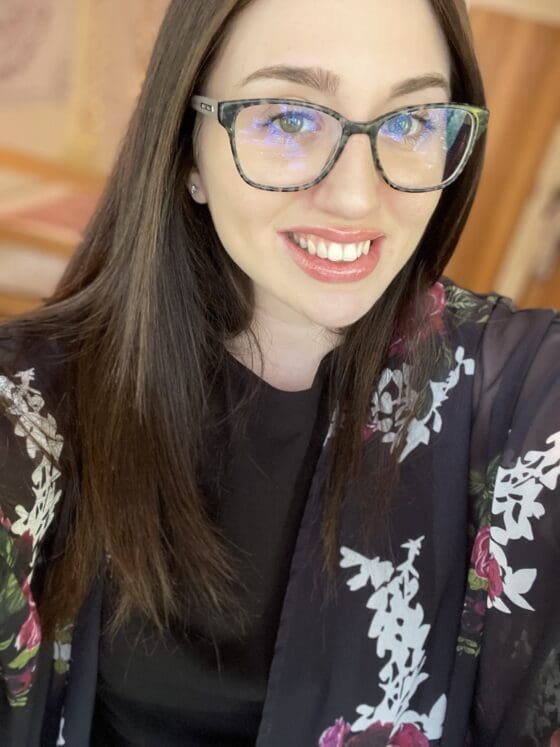
Isabelle Victoria Esposito is a Washington College Grant recipient who recently graduated from Pacific Lutheran University, where she double majored in Political Science and Religion. Now working as a Medical Coordinator at Peninsula Community Health Services and preparing for law school, Isabelle is pursuing a future in healthcare policy. In this Q&A, she shares how financial aid, her passion for public service, and the support of her family shaped her path through higher education.
What’s your name, what school did you attend, and what did you study?
My name is Isabelle Victoria Esposito, and I recently graduated from Pacific Lutheran University in Tacoma, WA, double majoring in Political Science and Religion.
What are your career or education goals following graduation? (if you’re currently working, please specify what your role is)?
Since graduating in May 2025, I have begun my role as a Medical Coordinator at Peninsula Community Health Services (PCHS) on the Kitsap Peninsula. What I love most about my current job is the versatility of the company. We are a Federally Qualified Health Center (FQHC) that was first established in Bremerton during the 1980s, and Bremerton is my hometown! They started out as a community health center with no regard for ability to pay or health insurance status, and many of those principles remain. This means that PCHS was deliberately designed as a type of nonprofit healthcare in which people below the poverty line, those who have faced language barriers and discrimination in their healthcare journey, and those from humble beginnings can obtain the same high-quality healthcare as they would from a private or corporate provider. Also, PCHS reflects my own values: providing services that extend beyond standard healthcare services such as legal representation, food access, housing, transportation, financial assistance, voter registration, health education, youth and adolescent care, long-term and disability care, and substance abuse treatment in addition to medical, dental, behavioral, and pharmacy care. They acknowledge the full scope of what it means to care for one’s health. Working alongside nurses and doctors is preparing me to better understand the current state of our healthcare in the United States. Currently, I am spending most nights after work studying for the LSAT, and I will be applying this fall to a list of law schools across the West Coast for admission in 2027. After obtaining my Juris Doctor (JD), I hope to improve healthcare policy for the State of Washington.
What inspired you to pursue college after high school?
I have grown up in Washington almost all my life, as I am a PNW native, and I went to Olympic High School on the Kitsap Peninsula. Pacific Lutheran University is exactly where I wanted to attend for college because I had a dream, and that dream was to pursue my education and find my purpose through the endless opportunities that would become available to me. I never could have imagined these possibilities if it had not been for PLU specifically. In high school I had a deep dualistic passion for both religion (my faith in God) and U.S. government and politics. It worked out perfectly when I discovered I could double major in both fields, even if I end up pursuing law as my primary career. I am the first in my family to graduate from a nonprofit private liberal arts university, and that is a huge accomplishment for myself and my family.
Have there been any challenges along the way? What helped you overcome them?
Absolutely, there have been challenges. Mostly financial struggles, as PLU is a private school and I always had to work jobs in between summers and breaks and such in order to fight for my education. What helped me the most, and still continues to do so, is the unconditional love and support of my mom. She has been my rock throughout all five years, and my family in general has encouraged me to stay in school and keep working hard. One of the biggest lessons I have learned from that is making the choice to not wait to take good care of myself. It’s important to still prioritize your mental, emotional, spiritual, and physical health even while attending higher education. It can be a real struggle, it’s not easy nor perfect, but it is totally possible. Just as my mom says, there are always options. The end of you is when there are no options. Look for the gray in the middle of the black and white. Just because my educational journey was hard did not mean that I had to give it up. I had to work through it, and in the end, I rose to the occasion and became resilient.
Are there any classes, programs, or people who’ve helped you figure out your path?
Absolutely! I cannot credit my hard work to my education without honoring those who have come before me, and have lovingly guided me along this journey. I would like to thank the entire Religion Department at PLU, especially my helpful advisors, mentors, and professors, Dr. Marit Trelstad, Dr. Micah Miller, Dr. Samuel Torvend, and Dr. Agnes Choi, in helping me realize more fully my theological and philosophical passion for religion. The wonderful Political Science Department has been my primary motivators, Dr. Maria Chavez and Dr. Michael Artime, as their phenomenal teaching style and curriculum has also helped me realize my equal passion for the law and litigation. All of these faculty members are personal, passionate, patient, and unwavering in fighting for my education alongside me.
You’re a recipient of the Washington College Grant. How did you first hear about it?
I first heard about the Washington College Grant in my senior year of high school, so in 2019-2020. I heard some other people at my school talking about how they were born and raised here (even though it is not required of you to be born in Washington to be eligible for the grant), and they mentioned this thing called the WA College Grant. I knew nothing about it until I got accepted into PLU and saw on my financial statement that I would be receiving it starting my first year at PLU.
What was your reaction when you found out you qualified for the WA Grant?
I was very grateful. I had no idea it even existed, and when I saw that it was a large amount being added to my tuition and other expenses, I was even more appreciative. This would be the beginnings of my learning about how state government has more of a direct impact on college students.
How has receiving the WA Grant impacted your ability to pursue college? What might your journey have looked like without it?
It has given me more leverage and room to work with in terms of covering a lot of my expenses, so that I didn’t need to work myself to death as much over the summers and breaks. I still had to work and I learned a lot and gained independence and strength from it, but the grant also covered a lot! This made it possible for someone like me to survive and thrive through PLU without burning myself out quickly.
I’m not sure how I would have been able to attend PLU without it. I thank my state legislators for it and urge them to continue prioritizing Washington students so that everyone has access to the opportunities I had.
What do you wish more students knew about the Washington College Grant or financial aid in general?
I cannot stress this enough: I highly encourage younger college students who are new to and just entering college (like I was for the first time) to learn about your state’s priorities. Is it a priority for your state (WA for example) to make it possible for high school graduates to attend colleges and universities that suit your future career goals, set you up for success, and make your family proud? For example, no one in my family had attended a private university, and I knew that although it would be financially difficult for me (a harder path to take), it was still possible. I also learned that the WA College Grant is one example of WA State prioritizing higher education as part of their policy agenda, though changes in funding (as we’ve seen in recent legislative sessions) can affect how students access those opportunities. Definitely learn about your state’s government and what is important to them, because you actually have the power to make a difference by talking with them! You are their constituent, and you have the power to persuade them in their policy goals. It’s one of many amazing ways to use your civic engagement to your advantage.
What advice would you give to other students thinking about applying for financial aid?
Do it! Think of it like this: You are investing in yourself. When you have all the support that you need, financially for school, you are setting yourself up for success to obtain the degree that you want and deserve, and you are more likely to find a job that pays you higher, and you will be able to pay off that investment. And, by utilizing financial aid, you are actively reminding your state of the prioritization of their policy goals: while we students invest in ourselves, the state will continually invest in us too.
What are you most excited about for your future?
I am most excited about using my degrees for further advancement in law school, so that I can participate in the full circle that I believe in: Investing in my own education so that I have something to pour from my cup to invest in other students’ educations someday. I plan on being a donor to PLU.
How do you hope your education will help you make a difference—in your family, community, or field?
I think my education will help me to provide for my future kids on a stable financial level, and I will also be able to give back to my mom like I have always dreamt of. My education will not only fiscally make a difference, but it will intellectually and psychologically add to the world around me.