State Legislature

Protecting Student Aid Is a Statement of Our Values

Protecting Student Aid Is a Statement of Our Values 600 600 College Promise Coalition

NEWSLETTER

Protecting Student Aid Is a Statement of Our Values

February 17, 2026

As lawmakers continue making budget decisions this session, we must remember that budgets are more than numbers on a page. They reflect our values and priorities as a state.

Last year, reductions to student financial aid created real uncertainty for Washington students, particularly those from low-income families. As the Seattle Times Editorial Board recently noted, “Budgets are moral documents.” When support for students is reduced unevenly, it sends a mixed message about who we believe deserves access to opportunity.

Washington has long declared that education is our paramount duty. We have also set an ambitious goal: ensuring 70% of Washington students earn a credential beyond high school. That goal will not be achieved without strong, stable investments in financial aid programs like the Washington College Grant.

Higher education is not an expense. It is an investment that strengthens our workforce, expands opportunity, and delivers long-term returns for families and communities across the state. Protecting student aid is one of the most direct ways lawmakers can demonstrate their commitment to affordability, equity, and economic growth.

As budget negotiations continue, we urge legislators to prioritize students and preserve the financial aid programs that make postsecondary education possible for thousands of Washington families.

We encourage our community and partners to continue reaching out to their legislators and sharing why education beyond high school matters. When lawmakers hear directly from students, families, educators, and employers, it reinforces what the data consistently show: protecting student aid strengthens economic mobility, workforce readiness, and Washington’s future.

Send a message to your legislator now with our simple tool.

Share this story

Bellingham Herald: If we’re serious about funding our future, we must fund higher ed

Bellingham Herald: If we’re serious about funding our future, we must fund higher ed 1140 641 College Promise Coalition

Tacoma News Tribune: Protecting higher education in Washington is vital for families

Tacoma News Tribune: Protecting higher education in Washington is vital for families 1220 960 College Promise Coalition

Seattle Times: Fully fund college tuition aid, whichever schools students choose

Seattle Times: Fully fund college tuition aid, whichever schools students choose 768 512 College Promise Coalition

Olympia Is Back in Session. Washington Students Are Counting on It.

Olympia Is Back in Session. Washington Students Are Counting on It. 600 600 College Promise Coalition

NEWSLETTER

Olympia Is Back in Session. Washington Students Are Counting on It.

January 27, 2026

As the legislative session gets underway in Olympia, the stakes for Washington students are coming into sharp focus.

Lawmakers have convened at a moment when students are doing everything asked of them. They are setting goals, pursuing credentials, and preparing to contribute to Washington’s economy. The question now is whether state leaders will meet that momentum with the investments students need to succeed.

Across the state, students, families, educators, and advocates are working to keep postsecondary opportunity within reach. As the session begins, those efforts deserve strong follow-through from policymakers.

Students Are Ready. Washington Must Be Ready Too.

Over the past year, we have shared stories of students like Zari, Colton, and Rodrigo, who have big dreams for their futures. They want to earn credentials, build skills, and step into careers that support themselves, their families, and their communities.

Their stories reflect a broader reality. Washington’s economy is expected to see more than 1.5 million job openings by 2032, driven by growth and retirements. Seventy-five percent of those jobs will require education beyond high school, including degrees, apprenticeships, and industry-aligned certificates. Students understand this reality and are preparing accordingly.

The Opportunity Ahead Is Significant

Recent progress shows what is possible when barriers are removed. Financial aid completion has reached record levels and enrollment among students receiving need-based aid is rebounding.

With the legislative session now underway, decisions made in Olympia will determine whether Washington builds on recent gains or allows opportunity to slip out of reach. Postsecondary education has already absorbed significant cuts, affecting colleges, universities, and the student aid programs that help keep opportunity within reach. Further reductions would put that progress at risk.

This Is the Moment to Act

That is why the College Promise Coalition has launched a Contact Your Legislators tool. In just a few clicks, you can send a message urging lawmakers to prioritize education beyond high school so students can succeed and Washington’s economy can thrive.

When legislators hear directly from constituents, it reinforces what student stories and data already show: education beyond high school is essential to economic mobility, workforce readiness, and a strong future for our state.

Together, we can support students, strengthen our economy, and build a more equitable future for Washington.

Share this story

Ending the Year with Momentum and a Call to Act for Washington Students

Ending the Year with Momentum and a Call to Act for Washington Students 600 600 College Promise Coalition

NEWSLETTER

Ending the Year with Momentum and a Call to Act for Washington Students

December 19, 2025

As we close out the year and look ahead to the upcoming legislative session, there is reason for both optimism and urgency when it comes to Washington students.

Across the state, students, families, educators, and advocates are doing their part to keep postsecondary opportunity within reach. At the same time, decisions that lawmakers make in the months ahead will determine whether that momentum continues or stalls.

As we prepare for the work ahead, we wanted to share some encouraging news, alongside clear signals from voters.

A Record Year for Financial Aid Completion

Washington reached an important milestone in 2025. For the first time on record, more than half of the state’s graduating seniors completed a financial aid application.

Roughly 53% of the class of 2025 filed either the FAFSA or the Washington Application for State Financial Aid (WASFA), according to new analysis from the Washington Student Achievement Council. Even more encouraging, completion increased most among students from low-income families, rising from 38% in 2024 to 44% in 2025.

This progress matters. Completing a financial aid application is one of the earliest indicators of whether a student will go on to earn a degree, certificate, or apprenticeship. Students who complete the FAFSA are more likely to enroll, persist, and complete a credential. That is critical in a state where 75% of job openings will require post-high school credentials.

Voters Are Clear About What Comes Next

This momentum aligns closely with what Washington voters are telling us.

In a recent statewide survey of Washington voters, 77% said some form of education beyond high school is necessary to succeed in today’s work world. Three-quarters support the state’s goal of having 70% of Washington students complete a degree, apprenticeship, or industry-aligned certificate or license by 2030, with support cutting across party lines.

Voters also recognize the cost barriers students face. Large majorities say student loan debt prevents people from pursuing education and from getting ahead in life. In that context, nearly seven in ten voters disapprove of recent cuts to education beyond high school.

Taken together, the message is clear. Washingtonians value postsecondary education, believe it is worth the investment, and want state leaders to protect access and affordability.

Turning Progress into Lasting Change

Record financial aid completion did not happen by accident. It reflects years of coordinated effort, smart policy choices, and sustained investment in students.

But progress remains fragile. Recent state-level cuts and ongoing uncertainty at the federal level threaten the very programs that are helping more students take the first step toward a credential.

As lawmakers prepare to convene, they have a choice. They can build on what is working, or they can reverse gains that students and families worked hard to achieve.

What We Are Calling for This Session

As the legislative session begins, the College Promise Coalition urges lawmakers to:

  • Protect core investments and avoid additional cuts that harm students and shrink opportunity.
  • Champion programs that remove barriers and help students complete high-value credentials, including restorations for the inequitable cuts to proven student aid programs.

As a state, we cannot retreat from our commitment to our students. We must make them a priority, remove barriers, and ensure they have pathways to credentials that align with their goals and lead to economic mobility and family-sustaining careers.

Together, we can keep Washington’s promise to our students and build a stronger, more equitable future.

Share this story

In a Time of Uncertainty, Washington Students Need Steadfast Support

In a Time of Uncertainty, Washington Students Need Steadfast Support 600 600 College Promise Coalition

NEWSLETTER

In a Time of Uncertainty, Washington Students Need Steadfast Support

November 13, 2025

Tamariya

The 2025 legislative session in Olympia is fast approaching, and the stakes for Washington students have rarely been higher.

As our state begins important budget conversations following significant funding cuts to higher education last session, the outlook from the federal government is growing more uncertain. If federal support falters, state aid becomes even more critical.

That is why protecting the Washington College Grant (WA Grant), one of the most generous financial aid programs in the country, must remain a top priority. The WA Grant is transforming access to higher education, giving students across Washington the resources they need to pursue their dreams and strengthen our shared future.

During the last legislative session, lawmakers made substantial cuts to higher education, including reductions that affected students receiving the WA Grant. Postsecondary education in Washington cannot absorb any additional cuts without risking student progress and long-term workforce goals.

Washington’s Bright Future and a Growing Challenge

Washington’s economy is expected to see more than 1.5 million job openings by 2032, with three out of four requiring a post-high school credential such as a degree, apprenticeship, or industry-aligned certificate. These opportunities reflect a thriving state economy that needs skilled workers more than ever.

But despite positive trends in enrollment among students receiving need-based aid, overall credential attainment remains too low. Only 40% of Washington high school students are projected to complete a credential by the time they are 26, leaving a projected shortfall of nearly 600,000 skilled workers by the end of the decade.

This gap underscores why the WA Grant is indispensable. It ensures that the door to opportunity stays open, particularly for students from low-income families, first-generation students, and communities of color.

Students at the Center

Behind every data point are real students whose lives are changed by access to financial aid. For Tamariya, pursuing higher education has been a journey of perseverance and purpose. After earning her Associate of Applied Science degree, she continued on to North Seattle College, where she is now enrolled in the Early Childhood Education Bachelor of Applied Science (BAS) program. Her goal is to become an early childhood educator and, eventually, take on a leadership role that helps shape classrooms that nurture and support young learners.

Tamariya was inspired to pursue college because she has always had a passion for working with children and wanted to make a difference in their lives. “I knew education would give me the knowledge and tools to turn that passion into a career,” she said. Balancing school, work, and personal responsibilities has been challenging, but she credits the support of her family, instructors, and financial aid resources for helping her stay in school.

“When I found out I qualified [for the Washington College Grant], I felt incredibly relieved and grateful, because it meant I could continue my education without so much financial stress,” Tamariya said. “It’s been life-changing because it’s allowed me to continue my studies full-time while focusing on my career goals. Without it, I likely would have had to work more hours, delay my education, or take out loans.”

Now looking ahead, Tamariya is focused on completing her BAS program and beginning her career as an early childhood educator. She hopes to make a difference “by supporting children during their most important years of development and being a positive role model for other students in my community who are thinking about pursuing higher education.”

Why It Matters Now

Recent data show encouraging signs:

  • Enrollment of students receiving need-based aid has increased by 30% at community and technical colleges and 4% at public four-year institutions during the pandemic recovery period.
  • At community and technical colleges, enrollment by racial/ethnic group rose the most for Black/African American students with a 28.4% increase and Latino students with a 26.9% increase from 2022 to 2024. Meanwhile, American Indian/Alaska Native (+16.2%) and Black/African American (+13.9%) student enrollment rose the most at public four-year institutions.
  • Washingtonians overwhelmingly value higher education. Three-quarters of voters support the state’s 70% credential attainment goal.

These are hard-won gains, but they are fragile. Recent state-level cuts could reverse this momentum, making it harder for students to access college and for employers to find skilled workers, making it harder for students to access college and for employers to find skilled workers. If funding for programs like the Washington College Grant is reduced further, it would have devastating consequences, particularly for students of color, women, and first-generation college students.

What We Can Do

To maintain Washington’s progress, the College Promise Coalition urges state leaders to:

  • Protect and sustain funding for the Washington College Grant and other proven student aid programs.
  • Avoid further cuts that limit access, affordability, and opportunity.
  • Keep Washington’s workforce goals on track by prioritizing postsecondary access and credential completion.

And our broader community has a role, too. Encourage the students in your family, schools, and networks to complete the FAFSA or WASFA now. Applications are open, and there is more funding available than many realize.

Looking Ahead

As Washington lawmakers prepare for the upcoming session, they have an opportunity to protect and restore critical investments in higher education. Students are working hard to earn credentials that will power our economy. Now, our job is to ensure every student has the support they need to finish strong.

Together, we can keep Washington’s promise, protecting opportunity, strengthening our workforce, and building a brighter, more equitable future for all.

Share this story

The Washington Grant Helped Zari Turn Passion into Purpose

The Washington Grant Helped Zari Turn Passion into Purpose 600 600 College Promise Coalition

NEWSLETTER

The Washington Grant Helped Zari Turn Passion into Purpose

April 23, 2025

Zari

The Washington College Grant (WA Grant) is more than just financial aid—it’s a pathway to opportunity and a brighter future. For Pacific Lutheran University senior Zari Warden, the WA Grant made it possible to pursue her education without the weight of overwhelming costs.

“Without the Washington College Grant, I would’ve worked more hours outside of work-study and felt more financially insecure,” Zari said. “I most likely would have taken out an additional loan, which would’ve been an additional financial hardship. I’m lucky to have not experienced that!”

Zari’s college journey has been one of discovery, creativity, and growth. She’s passionate about music, content creation, and building community—and thanks to financial aid, she’s been able to explore those passions instead of taking on extra jobs or additional debt.

After graduation, Zari hopes to work in nonprofit marketing and communications, continue making and performing her original songs, and working on the podcast series she created for her senior capstone.

Without the WA Grant, Zari says she likely would have needed to take out more loans—and may have missed out on experiences that shaped who she is today. “I’ve grown so much over the past four years. I can’t wait to continue impacting the community using the skills and lessons I carry with me.”

Call to Action: Help protect the Washington College Grant

As state lawmakers make important budget decisions, students like Zari are counting on our support. We encourage you to reach out to your legislators and ask them to protect the WA Grantand ensure every student can pursue the post-high school path that’s right for them.

Together, we can make sure cost isn’t a barrier to education—for Zari, Colton, Rodrigo, and all students across Washington.

In partnership,
College Promise Coalition

Share this story

The Washington College Grant: Fueling Students’ Passions—and Futures

The Washington College Grant: Fueling Students’ Passions—and Futures 600 600 College Promise Coalition

NEWSLETTER

The Washington College Grant: Fueling Students’ Passions—and Futures

April 7, 2025

Coltan Nussbaum

Washington’s economy depends on people who complete a credential after high school, such as a degree, apprenticeship, or certificate.

But for many students, the cost of education remains a significant barrier. That’s why the Washington College Grant (WA Grant)—one of the most successful financial aid programs in the nation—is a game-changer.

Just last week, The Seattle Times editorial board highlighted that, while statewide enrollment in higher education fell by nearly 100,000 students between 2013 and 2023, enrollment is on the rise among students who received the WA Grant. This is further proof that Washington students want to pursue postsecondary education and will do so when they have the support they need, and why we need to prevent Legislative cuts to the WA Grant.

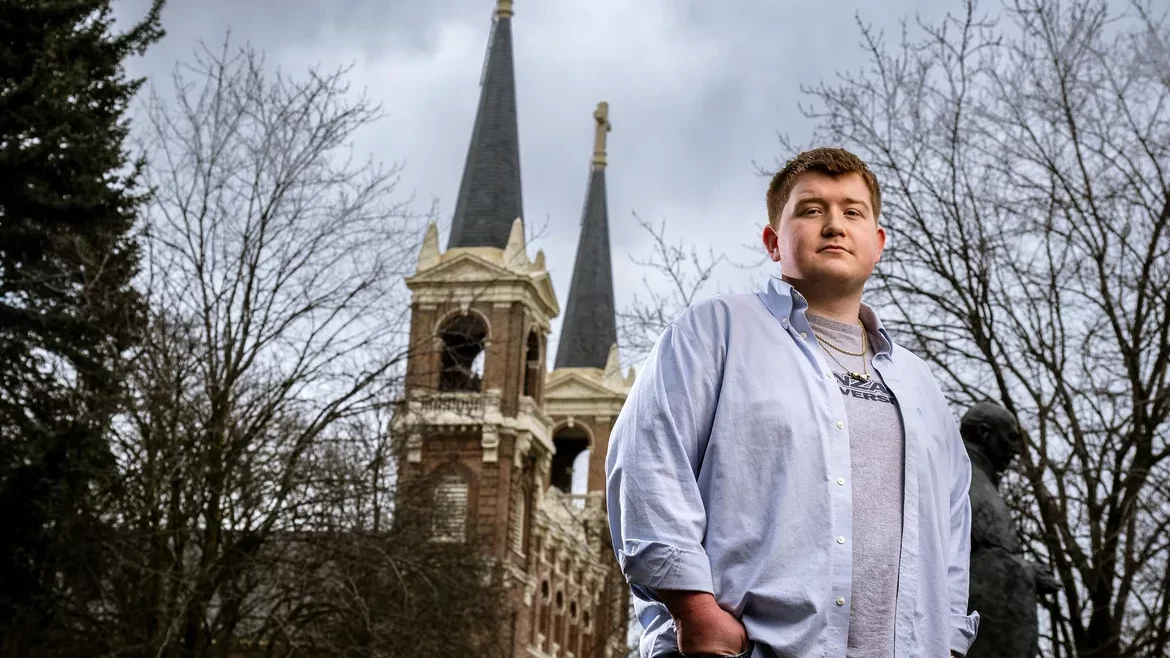
For Colton Nussbaum, a senior at Whitworth University, the WA Grant helped transform his dream of college into reality. “Receiving the Washington College Grant changed the question from ‘Can I afford higher education?’ to ‘What school do I want to go to?,’” he said.

The WA Grant not only eased the burden of tuition—it also made unique learning opportunities possible. Thanks to financial support, Colton joined the university’s Wind Symphony on tour in Thailand, an experience he describes as transformative: “Experiencing Asian culture has been impactful for my overall growth and college experience,” he said.

Now, Colton is preparing to graduate this spring—excited for change and ready to begin his next chapter in the workforce.

Call to Action: Contact Your Legislator

As state lawmakers make key budget decisions, we urge you to speak up for students like Colton. Use our simple toolto contact your legislators and ask them to protect the WA Grant and support access to post-high school education for all Washington students.

Together, we can ensure that no student’s dreams are limited by cost. Let’s keep working toward a future where every Washington student can pursue the credentials they need—and the future they deserve.

In partnership,
College Promise Coalition

Share this story

College Promise Coalition

The College Promise Coalition is a broad-based group advocating for increased higher education access and opportunity for Washington students.

© 2026 | Paid for by College Promise Coalition

Follow Us